As you know, On-page SEO refers to the process of optimizing all the elements of your website, while Off-page SEO improves your website's rankings by focusing on all the activities occurring outside the website.
Off-page SEO includes different strategies such as earning high-quality backlinks, optimizing your Google Business Profile, managing online reviews, engaging on social media, and increasing brand mentions across the web. It is like the popularity of your brand. You have seen filmmakers and artists put every effort into delivering the best story, which comes under On-page SEO, whereas the stars also put effort into promoting the movie, and that is Off-page SEO. Good popularity definitely attracts more audiences to go to the cinema and watch the movie.
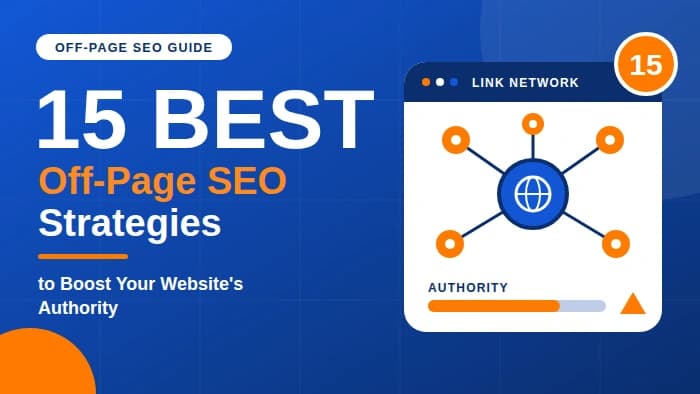
In this article, you'll learn about the 15 best Off-page SEO strategies and how they are important for increasing your website's visibility, improving search engine rankings, and driving long-term organic growth.
What Is Off-Page SEO?
Off-page SEO refers to all the activities that happen outside your website to increase its credibility, authority, and popularity. Unlike On-page SEO, which involves improving your website's content, structure, and technical elements, Off-page SEO helps search engines understand how trustworthy and valuable your website is based on external signals.
In simple words, On-page SEO builds a good website, while Off-page SEO helps search engines and users believe that your website is trustworthy. It is not done simply; you have to be strategic when implementing Off-page SEO for your website. You need to earn high-quality backlinks, optimize your Google Business Profile, manage online reviews, increase brand mentions, engage on social media, and much more.
Continue reading to learn the importance of Off-page SEO and its best techniques.
Why Is Off-Page SEO Important for Website Authority?
Off-page SEO is important for website authority because it helps search engines and users understand how trustworthy, credible, and authoritative your website is. It builds trust with search engines by earning high-quality backlinks, gaining positive customer reviews, and increasing your brand mentions across the internet.
You may have noticed that people often share the links and mention the names of well-known brands in their content. This is enough to show that your brand provides quality and is trusted by others.
How Off-Page SEO Differs from On-Page SEO
These two types of SEO are significantly different, but they work together to increase the online visibility of your website and content. On-page SEO controls all the important activities required to build a high-quality website and content, such as keyword placement, title tags, meta descriptions, headings, images, internal links, page speed, and technical elements. Its main goal is to create a high-quality website, improve the user experience, and increase relevance for search engines.
On the other hand, Off-page SEO focuses on activities that take place outside your website to build its authority, credibility, and popularity. These activities are entirely different from those of On-page SEO and include earning high-quality backlinks, managing online reviews, increasing brand mentions, engaging on social media, publishing guest posts, and optimizing your Google Business Profile.
Despite their differences, it is not possible to rely on only one type of SEO to achieve long-term success.
15 Best Off-Page SEO Strategies to Boost Your Website's Authority
Creating a great website is not just about building a high-quality website. It is also about making your website popular, trusted, and visible in search engine rankings. This is where off-page SEO comes in, and implementing it for your website is not a piece of cake. It involves well-planned strategies. Let's discuss the 15 best off-page SEO strategies.
1) Create High-Quality Backlinks
The most important aspect of off-page SEO is acquiring backlinks from reputable and relevant websites. Always try to get backlinks from high quality websites because one backlink from an authoritative website is far more valuable than hundreds of backlinks from low-quality websites. These backlinks signal to search engines that your website is authoritative and trustworthy, and that the content you publish is informative and relevant.
2) Publish Guest Posts on Authoritative Websites
You can create valuable and informative guest posts in your niche for other authoritative websites. This helps you gain quality backlinks, reach a wider audience, and establish yourself as an industry expert. You should also avoid writing guest posts only for websites that accept submissions from anyone. Instead, write for reputable websites that your target audience actually visits and trusts.
3) Digital PR and Media Outreach
You can earn powerful backlinks and increase your brand's visibility by sharing interesting news, original company data, or expert quotes with journalists and major news outlets. In simple words, link building today is all about digital PR.
4) Broken Link Building
Broken link building is a smart strategy for earning high-quality backlinks. If you find broken links on authoritative websites in your niche, you can contact the website owner and inform them about the broken links. You can then suggest a relevant piece of your content as a suitable replacement.
5) Creating Linkable Assets
Don't be desperate when wanting backlinks; just be organic to get links naturally. It is essential to create original content, add what you have discovered, and use infographics and images so that websites are naturally attracted to your content.
6) Encourage and Manage Customer Reviews
You can ask your satisfied customers to leave positive reviews on Google and other trusted review platforms because this shows that your business or website provides good quality. Usually, most people check reviews before trusting any product or information.
7) Grow Your Social Media Presence
Remaining active on social media does not directly improve search engine rankings, but it helps build trust and increases your content's reach and visibility. For this, you can share your valuable content, website updates, and unique features on social media platforms such as Facebook, Instagram, and X.
8) Convert Brand Mentions into Backlinks
Sometimes writers and website owners mention your brand name without adding a backlink to your website. Don't worry, this happens often. You can convert these mentions into backlinks by politely asking the website owner to add a link to your website. You can also find these unlinked brand mentions by using SEO monitoring tools.
9) Share Your Expertise on Podcasts
You can build more trust for your brand by appearing on podcasts. Lately, podcasts have become highly popular, and search engines even consider podcast audio and episode notes. You can appear as a guest on podcasts and share your expertise while increasing awareness of your brand. The host may also add a link back to your website in the show notes.
10) Join Relevant Online Communities (Reddit, Quora, Niche Forums)
You can join online communities where your customers spend time looking for answers to their questions. You can share relevant links with them, answer their queries in detail, and provide genuine help. This helps build trust, establish your authority, and drive more traffic to your website.
11) Influencer Marketing
You can collaborate with influencers in your industry to introduce your brand to an audience that is already interested and paying attention. When well-known influencers share your content, you can get real visitors, social media shares, and bonus backlinks to your website.
12) Document & PDF Sharing
You can also increase the rankings of your website by turning long blog posts into nice PDF guides, slideshows, or presentations, and uploading them to document-sharing websites (like SlideShare, Scribd, or Academia.edu).
13) Analyze Your Competitors' Backlinks
You can learn from your competitors by analyzing the authoritative websites that are linking to them. This helps you understand what kind of content gets more backlinks. You can also contact those websites and promote your own valuable content to earn similar backlinks.
14) Monitor and Clean Up Your Backlinks
Don't be lazy with your off-page SEO tasks. You should regularly check your backlink profile using SEO tools such as Ahrefs, SEMrush, or SEO SpyGlass to identify spammy and harmful backlinks. To keep your website authoritative, you can remove them or use Google's Disavow Tool to tell Google not to consider those links.
15) List Your Business in Local Directories
If your business serves a specific area, it is essential to list it in local directories. Make sure your business name, address, and phone number are the same on every directory, such as Google Business Profile, Yelp, Bing Places, and other trusted local business websites.
Common Off-Page SEO Mistakes to Avoid
If you do not take care of certain things, your off-page SEO is likely to fail, especially if you follow outdated or unethical practices. Many websites focus only on getting more backlinks and end up purchasing links from spammy or irrelevant websites. This can definitely harm your website's reputation. Likewise, negative or unanswered reviews can damage your online reputation and reduce customer trust. In addition, failing to monitor your backlinks can allow spammy or harmful links to affect your website's authority over time.
Best Tools for Off-Page SEO Analysis
The invention of SEO tools has made it easier to implement off-page SEO. The most commonly used tools for off-page SEO are:
1) Ahrefs
It helps analyze backlinks, monitor your backlink profile, research competitors, and find link-building opportunities.
2) SEMrush
It also helps analyze backlinks, perform competitor analysis, monitor brand mentions, and audit your backlink profile.
3) Google Search Console
It helps monitor the websites linking to your site and identify backlink issues for free.
4) SEO SpyGlass
It is a premium SEO tool that audits your backlink profile, detects harmful backlinks, and monitors link quality.
Conclusion
How fortunate you are to learn about the 15 best off-page SEO strategies for boosting your website's authority. You now understand the different aspects of off-page SEO and can choose SEO services that include these strategies. It is important to know these strategies because some business owners who do not know much about SEO are misled by SEO agencies that provide only a few SEO services while charging high prices. So, use these strategies and watch your business achieve online success.
FAQs
Frequently Asked Questions
You can increase your domain authority by creating high quality content, earning backlinks from reputable websites, and optimizing both your on-page and off-page SEO.